
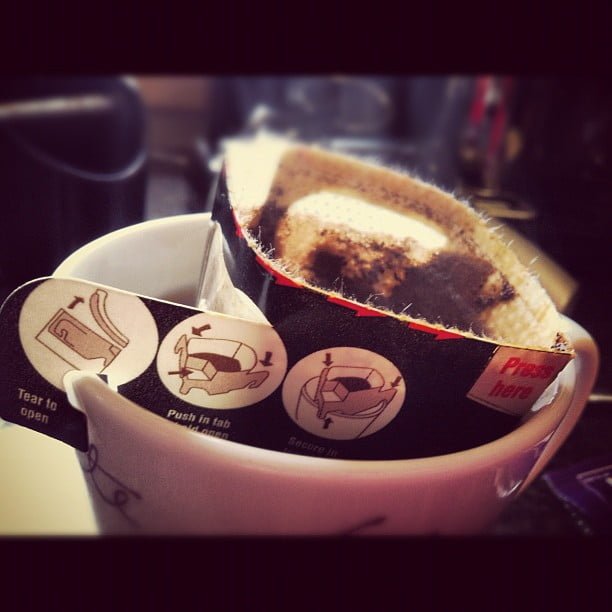
Recently, prominent domestic nephrologist Dr. Jiang Shou-shan stated publicly on his Facebook fan page that paper drip coffee bags sold on the market contain polyamide-epichlorohydrin (PAE) wet-strength agents to prevent the filter bags from tearing when exposed to hot water. Dr. Jiang alleged that the alcohols and essential oils naturally present in coffee accelerate the leaching of carcinogenic compounds from these wet-strength agents into brewed coffee, posing severe health hazards to consumers.
Because Dr. Jiang is a well-known kidney specialist and public commentator on environmental toxins who actively promotes non-toxic living and clean food products, his warnings triggered widespread consumer anxiety and skepticism regarding the safety of drip bag coffee products across society.
To address public concerns with scientific evidence, the Food and Drug Administration (TFDA) under the Ministry of Health and Welfare conducted comprehensive laboratory material tests on nine commercially available drip bag coffee products across the market. The test results conclusively demonstrated that all tested filter bags were fabricated from composite non-woven fabrics made of polypropylene (PP) combined with polyethylene terephthalate (PET) or low-density polyethylene (LDPE)—not conventional paper. Non-woven synthetic fabrics possess inherent tensile strength and wet resilience, eliminating any need for wet-strength chemical additives.
Using Fourier-Transform Infrared Spectroscopy (FTIR) for molecular material identification, the TFDA confirmed that the inner layer in direct contact with ground coffee in all nine samples was composed entirely of polypropylene (PP) non-woven fabric. For the outer support layer, four samples were low-density polyethylene (LDPE) and five samples were polyethylene terephthalate (PET) non-woven fabrics.
PP, LDPE, and PET are all thermoplastic synthetic polymers that naturally possess exceptional mechanical toughness and water resistance without requiring any wet-strength agents, easily maintaining structural integrity during hot water extraction.
Furthermore, because the inner contact layer of all nine products tested was PP—a food-contact packaging material renowned for its resistance to acids, alkalis, chemicals, mechanical stress, and thermal exposure with heat resistance thresholds ranging between 100°C and 140°C—it represents one of the most heat-tolerant food-grade plastics available. Consumers have no reason to fear the safety of brewing drip bag coffee.
The TFDA emphasized that the international use of polymer-based non-woven materials in food packaging has become standard practice worldwide, successfully balancing user convenience with consumer safety. The TFDA reaffirmed its commitment to evidence-based science, providing accurate, scientifically verified information to safeguard public food safety, and urged citizens not to succumb to unsubstantiated online rumors that trigger unwarranted panic.
Support Independent Perspectives & In-Depth Insights
Every thoughtful analysis and candid critique comes from our dedication to truth and quality. We choose not to follow sensational algorithms or clickbait headlines.
Sustaining independent research requires reader support. Make a one-time or monthly contribution, securely processed by Google.
Payments secured by Google · Manage or cancel anytime in your Google Account


Comments