
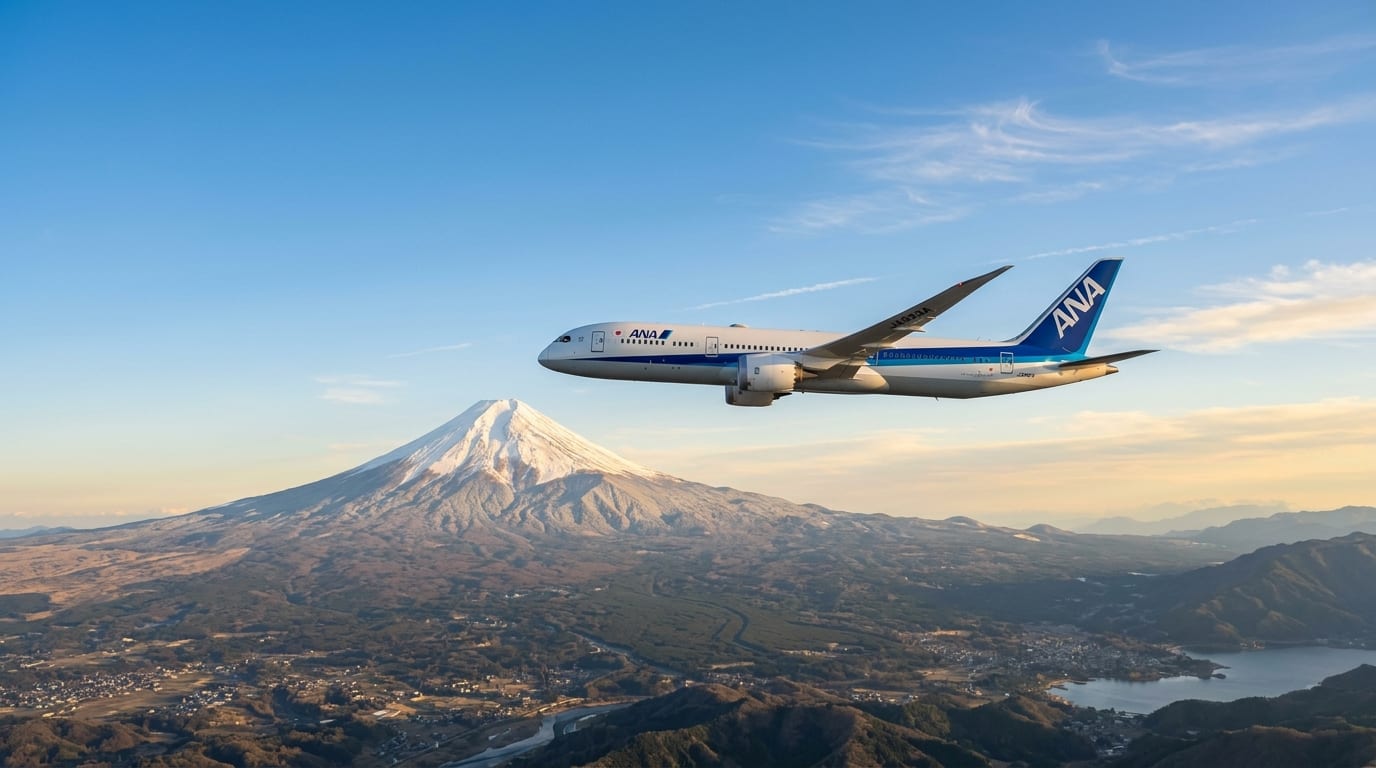
Welcome to the Vedfolnir Travel Hub! When planning a seamless independent journey to Japan, the single most pivotal step is securing your flights and airline tickets.
Cross-strait Japan routes form one of the world’s most bustling and high-density air corridors. From primary hubs like Tokyo (Narita/Haneda), Osaka Kansai, Nagoya Centrair, Fukuoka, and Sapporo New Chitose, to secondary cities across Okinawa and the Tohoku region, hundreds of flights operate weekly. Facing numerous carrier options, should you choose a Full-Service Carrier (FSC) that includes generous checked baggage and hot meals, or a flexible, budget-friendly Low-Cost Carrier (LCC) built for spontaneous getaways?
This guide breaks down the 8 leading airlines operating between the Republic of China and Japan—spanning Japanese and Republic of China flag carriers—alongside baggage allowance comparisons, ground transit tips, and practical airfare search strategies to help you book the most cost-effective tickets.
1. Japanese Full-Service Carriers (FSC)
For travelers seeking exquisite omotenashi hospitality, generous seat spacing, and exceptional on-time performance, Japan’s two legacy aviation giants stand out:
1. Japan Airlines (JAL)
Alliance: oneworld
Hubs: Tokyo Haneda (HND), Tokyo Narita (NRT), Osaka Kansai (KIX)
Departure Airports: Taipei Songshan (TSA), Taipei Taoyuan (TPE), Kaohsiung (KHH)
Japan Airlines (JAL), Japan’s historic national flag carrier, has long been revered by corporate executives and frequent travelers to Japan.
- Award-Winning Economy Legroom: JAL’s proprietary SKY WIDER economy seats feature a pitch of 33 to 34 inches (84–86 cm) and a generous width exceeding 18 inches, dramatically easing discomfort for tall passengers and seniors.
- Exceptional Baggage Allowance: Standard international economy tickets include 2 free checked bags of up to 23 kg each (46 kg total per passenger)—providing total peace of mind for shopping spree souvenirs and electronics.
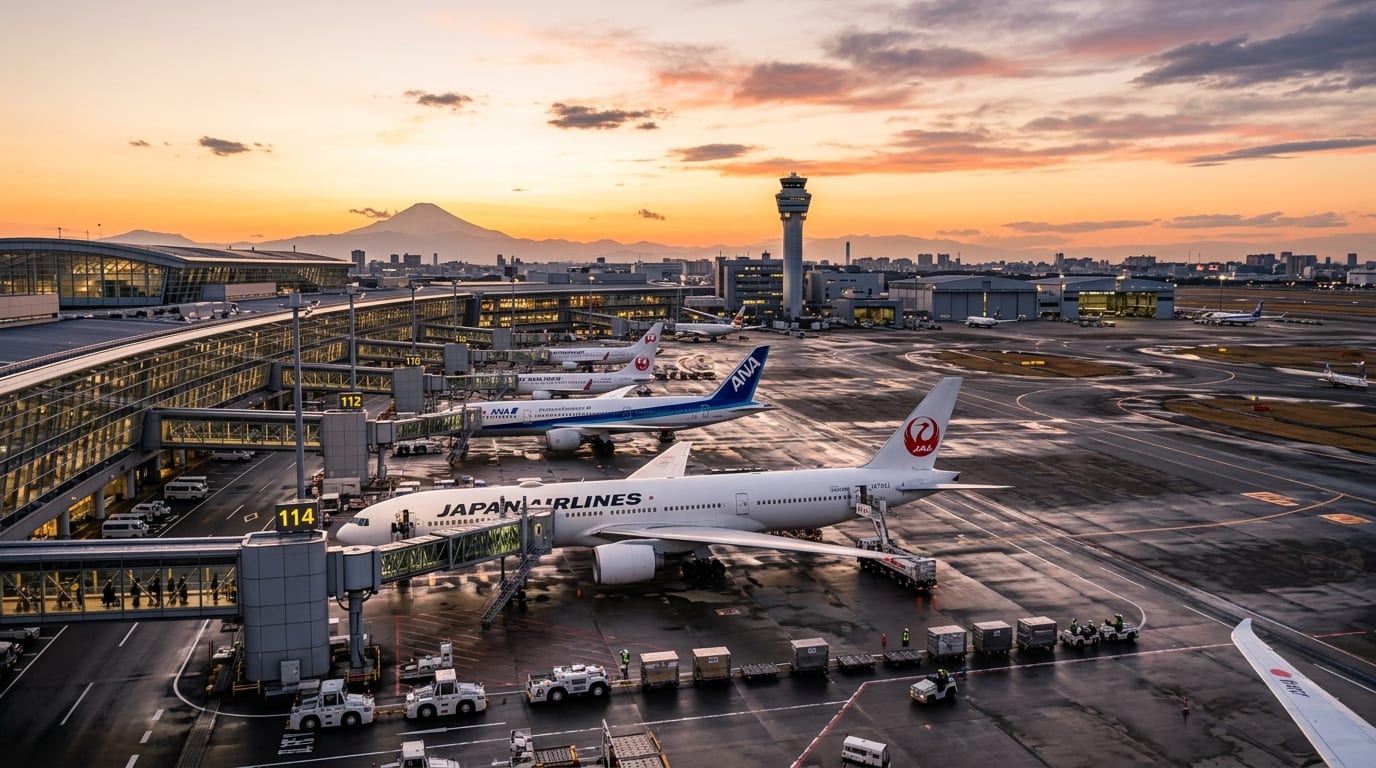
- The Songshan–Haneda Golden Business Route: Operating daily scheduled flights between Taipei Songshan and Tokyo Haneda, where the Tokyo Monorail whisks you to Hamamatsucho Station on the Yamanote Line in just 13 minutes, cutting substantial ground travel time.
2. All Nippon Airways (ANA)
Alliance: Star Alliance
Official Booking: Visit ANA Official Booking Portal
Departure Airports: Taipei Songshan (TSA), Taipei Taoyuan (TPE)
Japanese Hubs: Tokyo Haneda (HND), Tokyo Narita (NRT)
All Nippon Airways (ANA), consistently rated as a prestigious 5-Star Airline by aviation authority Skytrax, is Japan’s largest airline by fleet size and passenger volume, representing the pinnacle of refined customer service.
- Five-Star Dining & Hospitality: In-flight menus are curated in collaboration with award-winning Japanese master chefs, featuring signature Consommé soup and artisanal green teas.
- Top-Tier Reliability: ANA consistently ranks among the top globally for flight punctuality, with highly commended cabin crews and ground support teams.
- Extensive Domestic Connectivity: In addition to Songshan–Haneda flights, travelers can tap into ANA’s expansive domestic network to seamlessly connect to dozens of regional destinations across Hokkaido, Shikoku, and Kyushu.
2. Japanese Low-Cost Carriers (LCC)
Ideal for budget-conscious travelers, light packers, and those seeking early-morning departures or red-eye connections:
1. Peach Aviation
Main Hubs: Osaka Kansai (KIX Terminal 2), Tokyo Narita (NRT)
Route Network: Taoyuan and Kaohsiung to Osaka Kansai, Tokyo Narita, Tokyo Haneda, Okinawa Naha, Nagoya, and Sapporo
Part of the ANA Group, Peach Aviation is recognized by its vibrant magenta livery and dedicated Terminal 2 operations at Kansai International Airport.
- Late-Night & Red-Eye Flights: Famous for early-morning arrivals in Tokyo Haneda, perfect for maximizing vacation time on short holiday escapes.
- Tiered Fare Options: Flexible fare categories from Simple Peach (7 kg carry-on) to Value Peach (includes 1 checked bag, seat selection, and waived change fees).
2. Jetstar Japan
Main Hub: Tokyo Narita (NRT Terminal 3)
Key Strength: Dense domestic route network across Japan with competitive island-hopping fares
A joint venture between Japan Airlines (JAL) and the Qantas Group’s Jetstar Airways, based out of Narita.
- Regional Feeder Routes: In addition to cross-border routes, Jetstar Japan operates high-frequency domestic flights from Narita to Takamatsu, Matsuyama, Kumamoto, and Kagoshima, making open-jaw itineraries highly affordable.
3. ZIPAIR Tokyo
Main Hub: Tokyo Narita (NRT)
Fleet: All-Boeing 787-8 widebody aircraft
Brand Identity: Next-generation hybrid budget carrier
A wholly owned international subsidiary of Japan Airlines (JAL), ZIPAIR reshapes expectations of budget travel.
- Complimentary Fleet-Wide High-Speed Wi-Fi: Free satellite Wi-Fi available across all cabin classes.
- ZIP Full-Flat Business Seats: Features 180-degree lie-flat reverse-herringbone seating, allowing travelers to enjoy long-haul business-class rest at economy-class pricing.
3. Republic of China Full-Service Carriers (FSC)
Carriers from the Republic of China provide seamless communication, warm hospitality, and flexible ground customer support, making them the premier choice for family travel:
1. China Airlines
Alliance: SkyTeam
Operational Bases: Taoyuan Airport (TPE), Songshan Airport (TSA), Kaohsiung Airport (KHH)
Founded in 1959, China Airlines is the longest-standing civil aviation flagship carrier of the Republic of China, recognized globally for its elegant plum blossom livery.
- Most Extensive Japan Route Network: Beyond major gateways like Tokyo, Osaka, Nagoya, and Fukuoka, China Airlines exclusively operates scheduled flights to regional hubs such as Toyama, Takamatsu, Hiroshima, Kagoshima, and Kumamoto, simplifying open-jaw regional exploration.
- Next-Gen Fleet Upgrades: Deploying new Airbus A321neo aircraft on regional routes, outfitted with 4K personal seatback screens, free text-messaging Wi-Fi, and personal Bluetooth headphone connectivity.
2. EVA Air
Alliance: Star Alliance
Global Accolades: Consistent SKYTRAX 5-Star Airline winner and ranked among the world’s Top 10 safest airlines
EVA Air is celebrated worldwide for its impeccable safety record, punctual operations, and attentive customer service.
- Boeing 787 Dreamliner Deployments: Heavily utilized on high-density corridors like Tokyo and Osaka, featuring advanced cabin pressurization and humidity management to minimize flight fatigue.
- Sanrio Themed Jets: Beloved Hello Kitty and Sanrio family liveries featuring custom boarding passes, cabin accessories, and themed inflight dining.
3. STARLUX Airlines
Brand Positioning: Boutique Full-Service Airline
Fleet: All-new generation Airbus A321neo, A330neo, and A350 aircraft
Founded by Chang Kuo-wei, STARLUX Airlines has established a reputation for aviation craftsmanship and modern design.
- Sensory Cabin Experience: Equipped with crisp 4K touchscreens across all classes, complimentary messaging Wi-Fi, custom signature fragrances, and acclaimed dining collaborations.
- Expanding Japan Network: Rapidly connecting Tokyo Narita, Osaka, Okinawa, Nagoya, Sapporo, Sendai, Hakodate, Kumamoto, and Takamatsu.
4. Republic of China Low-Cost Carriers (LCC)
Tigerair Taiwan
Corporate Background: Subsidiary of the China Airlines Group
Market Position: The sole indigenous pure low-cost carrier in the Republic of China; undisputed king of regional Japanese destinations
Tigerair Taiwan operates an unrivaled network of direct flights to secondary and tertiary cities across Japan.
- Unmatched Direct Access to Regional Japan: Beyond Tokyo, Osaka, Fukuoka, and Okinawa, Tigerair Taiwan’s distinct competitive edge lies in direct scheduled routes to Okayama, Ibaraki, Sendai, Hanamaki, Niigata, Hakodate, Asahikawa, Saga, Akita, and Fukushima. This eliminates hours of exhausting Shinkansen transfers and heavy transit costs from Tokyo or Osaka.
- Multi-Airport Departures: Operates direct services from Taoyuan, Kaohsiung, and Taichung, ensuring maximum convenience across central and southern Taiwan.
5. Major Airlines Feature & Baggage Comparison Table
| Airline | Airline Category | Carrier Nationality | Alliance | Economy Checked Baggage | Carry-On Baggage Allowance | Key Stronghold Routes |
|---|---|---|---|---|---|---|
| Japan Airlines (JAL) | Full-Service (FSC) | Japan | oneworld | 2 pcs, 23 kg each (46 kg total) | 1 bag + personal item (10 kg total) | Songshan-Haneda, Narita, Kansai, Nagoya |
| All Nippon Airways (ANA) | Full-Service (FSC) | Japan | Star Alliance | 2 pcs, 23 kg each (46 kg total) | 1 bag + personal item (10 kg total) | Songshan-Haneda, Narita, Japan domestic network |
| China Airlines (CI) | Full-Service (FSC) | Republic of China | SkyTeam | Piece concept (Standard 1 pc, 23 kg) | 1 bag (7 kg) + personal item | Songshan-Haneda, Narita, Takamatsu, Toyama, Hiroshima |
| EVA Air (BR) | Full-Service (FSC) | Republic of China | Star Alliance | Piece concept (Standard 1 pc, 23 kg) | 1 bag (7 kg) + personal item | Songshan-Haneda, Narita, Kansai, Fukuoka, Sapporo |
| STARLUX Airlines (JX) | Full-Service (FSC) | Republic of China | Independent | Piece concept (Standard 1 pc, 23 kg) | 1 bag (7 kg) + personal item | Narita, Kansai, Sendai, Kumamoto, Hakodate, Okinawa |
| Peach Aviation (MM) | Budget (LCC) | Japan | None | Add-on required (Value/Prime includes 1 pc, 20 kg) | 2 pcs total (up to 7 kg) | Narita, Haneda red-eye, Kansai T2, Okinawa |
| Jetstar Japan (GK) | Budget (LCC) | Japan | None | Add-on required (Starter Plus includes 20 kg) | 2 pcs total (up to 7 kg) | Narita, Nagoya, domestic island routes |
| Tigerair Taiwan (IT) | Budget (LCC) | Republic of China | None | Add-on required (Bundles include 20 kg) | 2 pcs total (up to 10 kg) | Sendai, Okayama, Hanamaki, Ibaraki, Niigata |
6. Four Practical Strategies for Booking Japan Flights
1. Weighing Hidden Ground Transit Costs: Haneda vs. Narita
- Evaluating Tokyo Flights: Direct flights to Tokyo Haneda (HND) often carry a slight fare premium compared to Narita. However, Haneda is just 15–20 minutes by train into downtown Tokyo (approx. ¥500). By contrast, taking the Skyliner or N’EX from Narita (NRT) takes 40–60 minutes, with round-trip fares exceeding ¥5,000 alongside physical fatigue. Factoring in time and transit, Haneda is often the superior value.
- Kansai & Kyushu Considerations: Low-cost carriers at Kansai Airport typically use Terminal 2 (Peach), requiring extra shuttle bus transfer time. In contrast, Fukuoka Airport is merely a 5-minute subway ride from JR Hakata Station—making it arguably the easiest Japanese airport for beginners.
2. When to Choose Full-Service vs. Low-Cost Airlines?
- Choose Full-Service Carriers when:
- Traveling with multi-generational family members or young children, where meal service, generous legroom, and reliable cancellation policies are paramount.
- Traveling during autumn foliage, winter ski trips, or shopping for home electronics where luggage is guaranteed to exceed 20 kg.
- Flying during typhoon seasons when rerouting flexibility is crucial.
- Choose Low-Cost Carriers when:
- Backpacking, solo traveling, or taking a spontaneous 3-to-4-day weekend trip.
- Looking to save a night of hotel costs via red-eye flights.
- Venturing into Tohoku, Shikoku, or southern Kyushu where Tigerair Taiwan offers the only direct scheduled flight.
3. Flight Search & Price Comparison Best Practices
- Leverage Aggregator Meta-Search Tools: Use flight metasearch engines to track fare alerts across targeted dates.
- Track Seasonal Schedule Release Dates:
- Low-cost airlines typically open their Summer Schedules (between November and January) and Winter Schedules (between July and August).
- Full-service carriers release major promotional discount codes around spring and autumn travel fairs.
- Book Directly on Official Airline Portals: After finding target fares on aggregator tools, finalize your reservation directly on official airline portals (such as the ANA Official Booking Portal) to avoid third-party agency processing surcharges or difficult post-sale customer support.
Support Independent Perspectives & In-Depth Insights
Every thoughtful analysis and candid critique comes from our dedication to truth and quality. We choose not to follow sensational algorithms or clickbait headlines.
Sustaining independent research requires reader support. Make a one-time or monthly contribution, securely processed by Google.
Payments secured by Google · Manage or cancel anytime in your Google Account


Comments