

Whenever little insects invade our homes or offices, most people immediately turn to Google searching for pest control tips or contact details for exterminator companies. I’m no exception, especially when confronting strange creepers I’ve never laid eyes on. Yet I have observed a peculiar and paradoxical issue with online pest-control guides: when the author is overly dedicated, it quickly becomes a traumatic headache.
Presumably, anyone actively searching for pest control information online genuinely detests these critters and wants them gone as quickly as possible. The usual household suspects typically include huntsman spiders, mice, cockroaches, standard spiders, geckos, and centipedes (all lumped into the broad category of unwanted vermin), and even unfamiliar little bugs can terrify many humans[1].
Well, with the notable exception of my aunt.
Once, I accompanied my mother and aunt out into the fields to pick roselle flowers. I watched with my own eyes as my aunt plunged her bare hand deep into a bush to pluck a blossom, unaware that the backside was covered in newly hatched spiderlings that went swarming all over her forearm. It frightened the living daylights out of me—while my aunt didn’t bat an eye.
I, on the other hand, am a proud urbanite. Fearing spiders, fearing huntsman spiders, fearing mice, fearing beetles, and fearing an endless list of multi-legged creatures is entirely natural.
When these “creatures” inevitably make an unwelcome entrance into our everyday surroundings, our urban sensibilities instinctively drive us to search online for eradication tutorials.
And that is precisely where the nightmare begins: online guides are often written with far too much detail. Far, far too much graphic detail!
Yes! When an author is excessively thorough, it turns into an ordeal.
The moment we open the guide in our browser, the first visual that assaults our eyes and burns directly into our retinas is a barrage of high-resolution, dark, shiny cockroaches, menacing hairy spiders, and worst of all, triumphant close-ups displaying the “gruesome carnage” of the aftermath!
Dear authors, who are you trying to traumatize here?
Every time I open one of these “ultra-detailed” write-ups, I find myself wishing my eyes had an automated mosaic censorship blur.
So, on behalf of fearful readers everywhere, I must offer this plea to hard-working insect writers: next time you draft an “Insect Eradication Protocol”, please at least add a prominent warning in the title: "**Warning: Graphic bug photos enclosed, view with discretion**".
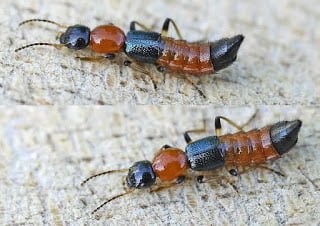
Well, even though that’s a rove beetle, honestly, it might be better without the photo after all ˊ_>ˋ.
[1] Rove Beetles: Preventing the Most Dangerous Summer Insect and Treating Dermatitis.
[2] Originally written on January 27, 2013.
Support Independent Perspectives & In-Depth Insights
Every thoughtful analysis and candid critique comes from our dedication to truth and quality. We choose not to follow sensational algorithms or clickbait headlines.
Sustaining independent research requires reader support. Make a one-time or monthly contribution, securely processed by Google.
Payments secured by Google · Manage or cancel anytime in your Google Account




Comments